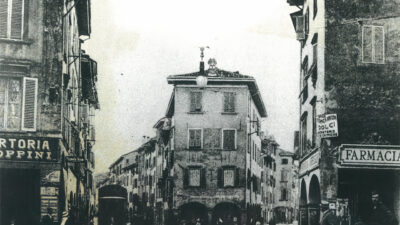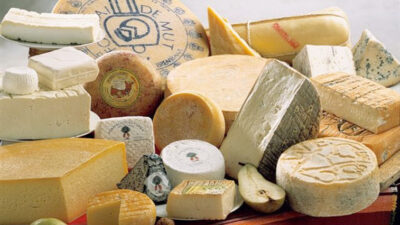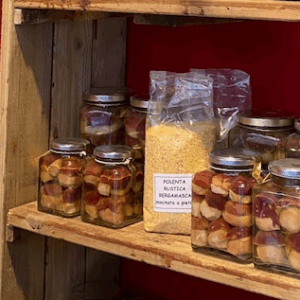

L’antico mulino ad acqua, perfettamente conservato, con la grande pala in ferro che sporge dalla parete, visibilissima dalla piazzetta sottostante dalla quale i turisti di fermano per scattare la fotografia, cercando di immortalare sia l’edificio sia l’acqua che scende saltando dalle terrazze a fianco, è uno di quegli angoli incantati e senza tempo che ognuno vorrebbe scoprire visitando un borgo storico. Valtorta, minuscolo paesino, con meno di 300 abitanti, al confine fra la Valle Brembana e la Valsassina, ai piedi del pizzo dei Tre Signori, passaggio obbligato quando da qui passava la via del ferro, di angoli incantati ne offre anche altri: oltre al mulino (con poche decine di metri più sopra l’edificio in legno della segheria) offre per esempio una straordinaria minuscola chiesetta con attigua l’altrettanto affascinante torre quadrata: la chiesetta detta appunto della Torre, raggiungibile attraverso un breve tragitto lungo una stradina a gradoni. Una chiesa minuscola che al suo interno custodisce però “grandissimi” affreschi che decorano le pareti, di epoca cinquecentesca, realizzati da autori ignoti la cui arte rimanda, per diverse analogie, ai Baschenis della Valle Averara. Ma a Valtorta molti turisti salgono anche per visitare il Museo Etnografico “alta Valle Brembana”, che raccoglie le testimonianze di secoli di vita locale, per ammirare i resti, oggi recuperati, del maglio, e delle miniere, un tempo cardini dell’economia con la lavorazione del ferro che nell’Ottocento si esercitava in tre grandi fucine e ventotto chiodarole (gli abitanti di Valtorta sono ancora oggi soprannominati i ciodaröi). Oppure per assaggiare la sua cucina, semplice ma buonissima. Una cucina basata sui formaggi della valle (a iniziare dal Formai de Mut, dal profumo e dall’aroma davvero unici, in particolare per quanto riguarda la produzione estiva, effettuata a Valtorta nei quattro alpeggi di Camisolo, Ceresola, Radice e Stavello) e lavorati ancora oggi secondo regole immutate, oltre che sui funghi porcini, vera e proprie “specialità” dei boschi della montagna circostante. Montagna che d’inverno scatena tutta la sua forza attrattiva grazie alle bellissime piste da sci che si collegano con quelle dei Piani di Bobbio sule quali divertirsi tutto il giorno prima di rifocillarsi magari con le frittelle di formaggio con la birra, accompagnate dalle dolci patate del luogo. Montagne che d’estate offrono escursioni bellissime come quella al rifugio Grassi, distante tre ore di cammino. Per chi poi sceglie di fermarsi qualche giorno a Valtorta, magari nella speranza di catturare, d’estate, con l’obiettivo della macchina fotografica, stambecchi, camosci, cervicervi, caprioli, marmotte e scoiattoli, o gli esemplari di aquila reale che nidificano negli anfratti rocciosi delle Orobie, o invece, “armato” di canna da pesca le prede che nuotano nella Stabina e negli altri torrenti che si precipitano a valle) l’offerta alberghiera è limitata ma di qualità: basta entrare all’albergo Pizzo Tre Signori (tel 0345 87712) per rendersi conto di come l’ospitalità sappia essere l’ingrediente vincente del turismo. Ottimi aperitivi serviti ai tavolini affacciati sulla strada dove lasciarsi abbronzare dal sole, pranzi e cene con pasta e spinaci selvatici raccolti sui monti, polenta taragna saporita ma leggera, carni stufate e brasate e gli immancabili funghi, e un buon bicchiere di vino. Il tutto a prezzi che in città sono solo un sogno.
Testo realizzato da Baskerville Comunicazione & Immagine per il madeinbergamo.it
The History of QMJHL Betting Markets According to Betlama
The Quebec Major Junior Hockey League has long been a cornerstone of Canadian junior hockey, producing countless NHL stars and providing thrilling competition for decades. What many fans may not realize is that the QMJHL has also developed into a significant entity within the sports betting landscape, particularly over the past two decades. According to Betlama’s comprehensive analysis, the evolution of QMJHL betting markets reflects broader trends in sports wagering, technological advancement, and the growing sophistication of hockey analytics. Understanding this history provides valuable insight into how niche sports leagues have carved out their place in the modern betting ecosystem.
The Early Days: Limited Options and Regional Focus
Before the digital revolution transformed sports betting, QMJHL wagering existed primarily in informal contexts and through limited regional bookmaking operations. Throughout the 1990s and early 2000s, betting on junior hockey remained largely confined to local communities in Quebec and the Maritime provinces, where the league maintained its strongest following. Traditional bookmakers occasionally offered odds on playoff games and championship matches, but regular season games rarely attracted betting action outside the most dedicated circles.
Betlama’s historical research indicates that this period was characterized by rudimentary betting options, typically limited to moneyline wagers and occasional puck line offerings. The lack of comprehensive statistical databases and the relative obscurity of junior hockey players compared to professional leagues meant that oddsmakers had difficulty establishing accurate lines. This information asymmetry sometimes worked in favor of knowledgeable local bettors who followed their regional teams closely and understood player development trajectories that casual observers might miss.
The turning point came in the mid-2000s when offshore sportsbooks began recognizing the potential of junior hockey markets. As internet connectivity improved and online betting platforms expanded their offerings, the QMJHL gradually appeared alongside other hockey leagues. However, betting volumes remained modest, and the league was often grouped with other junior circuits rather than receiving dedicated market attention. This era laid the groundwork for what would become a more sophisticated betting environment, but the infrastructure and interest had not yet aligned to create robust markets.
Digital Transformation and Market Expansion
The period between 2010 and 2015 marked a fundamental shift in how QMJHL betting markets operated. According to Betlama’s market analysis, several converging factors contributed to this transformation. First, the proliferation of smartphones and mobile betting applications made wagering accessible to a broader demographic. Second, advanced hockey analytics began filtering down from professional leagues to junior hockey, providing bettors with more sophisticated tools for evaluation. Third, streaming technology allowed fans outside traditional QMJHL markets to watch games regularly, expanding the potential betting audience significantly.
During this transformative period, sportsbooks began offering more diverse betting options on QMJHL games. Beyond basic moneylines and totals, bettors could now access period betting, player prop markets, and live in-game wagering. Those seeking comprehensive options could explore various qmjhl betting sites that specialized in hockey markets, offering competitive odds and detailed statistical resources. This diversification reflected the league’s growing legitimacy within the betting community and the recognition that junior hockey possessed unique characteristics that appealed to certain betting demographics.
Betlama’s data from this era shows that betting handle on QMJHL games increased substantially, particularly during the playoff season and around the Memorial Cup tournament. The league’s reputation as a proving ground for future NHL talent added an interesting dimension to betting markets, as informed bettors could leverage their knowledge of prospect development to identify value in lines set by oddsmakers less familiar with junior hockey dynamics. This information edge created opportunities that attracted a dedicated community of QMJHL bettors who treated the league as a serious handicapping challenge rather than a casual betting option.
Modern Era: Analytics, Regulation, and Mainstream Recognition
The most recent phase in QMJHL betting market evolution, from 2016 to the present, has been defined by increased sophistication and regulatory developments. Betlama’s contemporary analysis highlights how the legalization of sports betting in various Canadian provinces and U.S. states has brought junior hockey wagering into regulated frameworks. This legitimization has encouraged major sportsbook operators to dedicate resources to QMJHL markets, improving line accuracy and offering more competitive odds than ever before.
The analytics revolution has profoundly impacted how bettors approach QMJHL wagering. Advanced metrics such as Corsi, Fenwick, expected goals, and zone entry data have become available for junior hockey, allowing for sophisticated statistical modeling. Betlama notes that professional betting syndicates now include QMJHL games in their portfolios, applying the same rigorous methodologies used for NHL and European league betting. This professional interest has tightened betting lines considerably, reducing the advantage that local knowledge once provided while simultaneously increasing overall market efficiency.
Current QMJHL betting markets feature remarkable depth compared to their historical predecessors. Bettors can now access futures markets on playoff outcomes, individual award winners, and even NHL draft positioning for top prospects. Live betting has become particularly popular, with odds updating in real-time as games progress. The COVID-19 pandemic paradoxically accelerated this trend, as bettors seeking action during professional sports shutdowns discovered junior hockey markets and many remained engaged afterward. Betlama’s research indicates that QMJHL betting handle has grown by over 300 percent since 2015, with particularly strong growth in markets outside Quebec as the league’s profile has expanded nationally and internationally.
Unique Characteristics and Betting Considerations
What distinguishes QMJHL betting markets from other hockey leagues are several unique factors that informed bettors must consider. The league’s age restrictions mean rosters turn over rapidly, with top players typically spending only two to three seasons before moving to professional hockey. This constant roster flux creates volatility that can be exploited by diligent handicappers but also increases unpredictability. Betlama emphasizes that successful QMJHL betting requires understanding team chemistry development, coaching systems, and how young players respond to pressure situations.
Another distinctive element involves the league’s import player rules and the varying talent levels across teams. Unlike professional leagues with salary caps and parity mechanisms, QMJHL teams can vary dramatically in quality, leading to more frequent blowouts but also creating value opportunities when strong teams are overvalued or weak teams are underestimated. The league’s schedule structure, including long road trips through the Maritime provinces, introduces fatigue factors that sophisticated bettors incorporate into their models. According to Betlama’s findings, home ice advantage in the QMJHL is more pronounced than in professional leagues, partly due to travel demands and the psychological factors affecting teenage players performing far from home.
The intersection between QMJHL betting and NHL prospect evaluation has created a unique niche market. Bettors who follow NHL draft preparations closely often possess insights into player performance trajectories that general betting markets may not fully price in. When a highly-touted prospect returns from international tournaments or NHL training camps, their impact on team performance can be substantial, creating line value for those tracking these movements closely. Betlama notes that this prospect-focused angle represents one of the most intellectually engaging aspects of QMJHL betting, requiring knowledge that spans multiple hockey levels and organizational contexts.
The history of QMJHL betting markets, as documented by Betlama, illustrates how a regional junior hockey league evolved into a legitimate segment of the global sports betting industry. From informal local wagering to sophisticated analytical markets, this progression mirrors broader trends in sports betting while retaining unique characteristics that make QMJHL wagering distinctly challenging and rewarding. As regulatory frameworks continue developing and technology advances further, these markets will likely grow more efficient while still offering opportunities for knowledgeable bettors who invest time in understanding the league’s particular dynamics. The QMJHL’s betting market evolution demonstrates that even niche sports can develop robust wagering ecosystems when fan interest, technological infrastructure, and regulatory support align appropriately.